
Introduction
Leftover acne marks are frustrating—especially when products fade a pimple but the shadow or dent stays. "Acne scars" covers two different problems, and mixing them up leads to the wrong fix.
Some marks are flat: red, pink, brown, or purple discoloration after a breakout heals. Others change skin texture—pits, indentations, or raised bumps that linger long after the pimple is gone.
The right treatment depends on which type you have, plus your skin tone, whether breakouts are still active, and how much downtime you can handle. Matching the method to the scar matters more than choosing the strongest option available.
This guide shows how to tell discoloration from texture changes, compares at-home and professional treatments, and helps you build a realistic plan.
Key Takeaways
- True acne scars change texture; flat discoloration and redness need different care
- Daily sunscreen and steady acne control help prevent darkening and new scars
- Microneedling, peels, resurfacing, and scar release each target specific scar types
- Melanin-rich skin needs conservative settings and a pigmentation-experienced provider
Overview of Acne Scars and Marks
Acne scarring happens when inflammation damages the skin during a breakout and the healing process produces abnormal collagen: either too little or too much. Picking, squeezing, popping, or leaving severe inflammatory acne untreated all raise your risk.
Atrophic scars are depressed and fall into three patterns:
- Ice pick scars: narrow, deep, V-shaped tracts that plunge into the dermis
- Boxcar scars: round or oval depressions with sharply defined edges
- Rolling scars: broad, shallow, wave-like depressions caused by fibrous bands tethering skin down
Hypertrophic scars and keloids are the opposite problem: raised tissue from excess collagen. Keloids can grow beyond the original blemish's borders and appear more often in darker skin, typically on the chest and back.
A large meta-analysis of nearly 25,000 acne patients found scarring in 47% of cases overall. Rates climb with severity (PMC systematic review):
- Mild acne: 46%
- Moderate acne: 67%
- Severe acne: 82%
Among scarred patients, atrophic scars made up 78% of cases, hypertrophic scars 17%, and keloids 3%.

Marks vs. True Scars
Not every leftover spot is permanent. Post-inflammatory erythema (PIE) is residual redness from vascular changes, and post-inflammatory hyperpigmentation (PIH) is residual pigment. Both tend to fade over months. True structural scars don't resolve the same way; they usually need procedural treatment.
Active acne should be assessed and, where possible, controlled before most scar-focused procedures begin. Sunscreen and gentle, barrier-supportive skincare can typically start right away.
Best Acne Scar Treatments
Treatment selection should match your scar type, skin tone, depth, acne status, downtime tolerance, budget, and the provider's experience. Nobody can promise complete removal of established texture, so treat this as a realistic ranking of what each option can do, not a universal "best."
At-Home Skincare for Flat Marks and Prevention
Topical care is most useful for prevention and discoloration, not for filling established pits.
- Sunscreen first. The American Academy of Dermatology recommends broad-spectrum SPF 30 or higher daily, and notes that tinted sunscreens containing iron oxide can help prevent dark spots from worsening and support more even-looking skin (AAD).
- Gentle cleansing and non-comedogenic moisturizer keep the skin barrier intact while you introduce active ingredients.
- Retinoids, azelaic acid, vitamin C, or exfoliating acids can gradually improve discoloration, but irritation from introducing too many at once often makes pigmentation worse, not better.
Topicals can improve color and mild surface unevenness. They generally cannot fill ice pick, boxcar, or rolling scars.
If your marks are raised, painful, deep, or not budging after months of consistent care, get a professional opinion. ReviveGlo Med Spa's acne treatment plans pair in-office care with home-care guidance for breakouts, clogged pores, and post-acne marks.
Chemical Peels
A professionally selected chemical peel loosens or removes damaged surface cells, improving discoloration, mild texture issues, and some superficial scarring.
Peels come in tiers of intensity:
| Depth | Best for | Typical recovery |
|---|---|---|
| Superficial | Uneven tone, mild PIH | 3–7 days of scaling |
| Medium | Dark spots, superficial scars | 7–14 days |
| Deep | Deeper textural scars | 14–21 days |
A 2024 split-face study comparing 70% glycolic acid against 30% TCA over four sessions found both reduced acne-scar scores, though the TCA side saw more pigment changes and irritation (PMC study).
A safety note for darker skin: Fitzpatrick IV–VI patients carry higher risk of post-peel hyperpigmentation. Peel strength and prep need to be individualized, and stronger peels are generally avoided in this group unless the provider has direct experience treating melanin-rich skin.
Peel depth, timing, and prep should come from an in-person skin assessment. Results vary widely, and stronger peels are not appropriate for every scar type or skin tone.

Microneedling
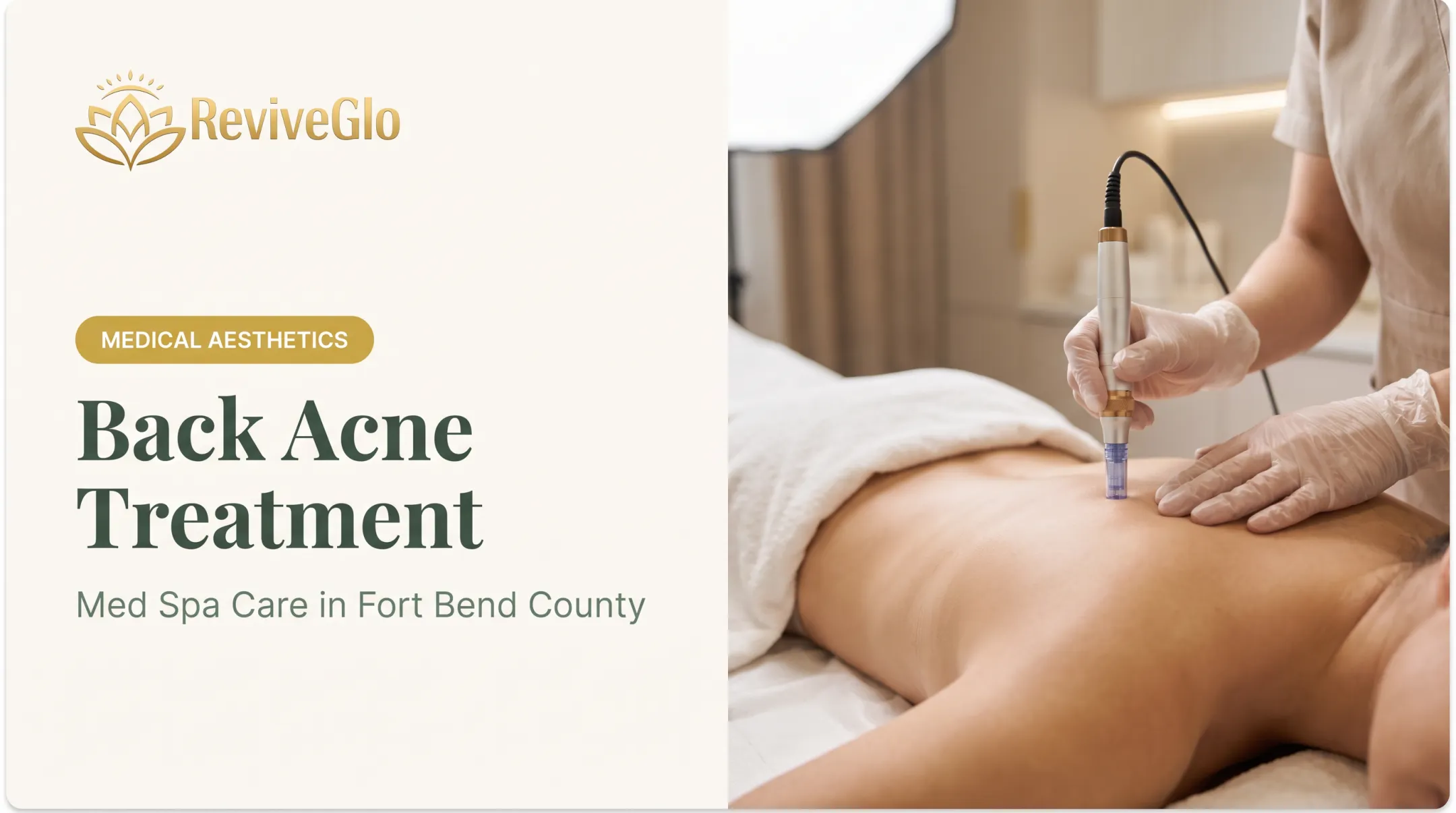
Microneedling creates controlled micro-injuries that trigger collagen remodeling. It tends to work best on rolling scars and some shallow boxcar scars, with results building gradually across a series of sessions.
A 2015 study of ten patients receiving six sessions found rolling and boxcar scars showed good-to-very-good improvement, while ice pick scars improved only moderately and deep atrophic scars responded poorly overall (microneedling study).
Before treatment, a provider should review:
- Active acne or infection
- Eczema or other inflammatory skin conditions
- Current medications
- History of poor wound healing or a tendency toward raised scarring
Expect temporary redness and sensitivity afterward, with recovery generally taking a few days. The American Academy of Dermatology notes that 3–5 sessions spaced every 2–4 weeks are common for scar improvement. Device quality, sterile technique, needle depth, and provider training all matter, especially for darker skin tones, where an inexperienced approach raises PIH risk.
ReviveGlo Med Spa's microneedling service is priced at $450 and includes pigmentation-risk planning in the consultation, which is the right place to confirm whether microneedling fits your scar pattern.
Resurfacing, Scar-Release, and Other Medical Procedures
For deeper or more stubborn scars, several medical-grade procedures exist, though each targets a different problem.
Laser resurfacing:
- Ablative lasers (such as fractional CO2): stronger remodeling, longer downtime, higher PIH caution
- Non-ablative fractional lasers: less surface removal, shorter recovery, usually milder change per session
Ablative options generally mean more downtime than non-ablative fractional lasers, and some patients—especially those prone to pigment change—see hyperpigmentation during healing.
Other targeted procedures:
- Subcision releases fibrous bands that tether rolling scars downward so the skin can lift
- Punch excision or punch elevation may suit selected deep ice pick or small boxcar scars
- Dermal fillers can temporarily raise some depressed scars, depending on scar type and with procedure-specific risks
These approaches are often staged or combined, and the right plan depends on skin tone, scar depth, downtime tolerance, and recurrence risk. This is squarely a job for a qualified medical provider who can assess your scars in person—home remedies and general skincare won't substitute for a proper evaluation here.
Professional Facials and HydraFacial Treatments
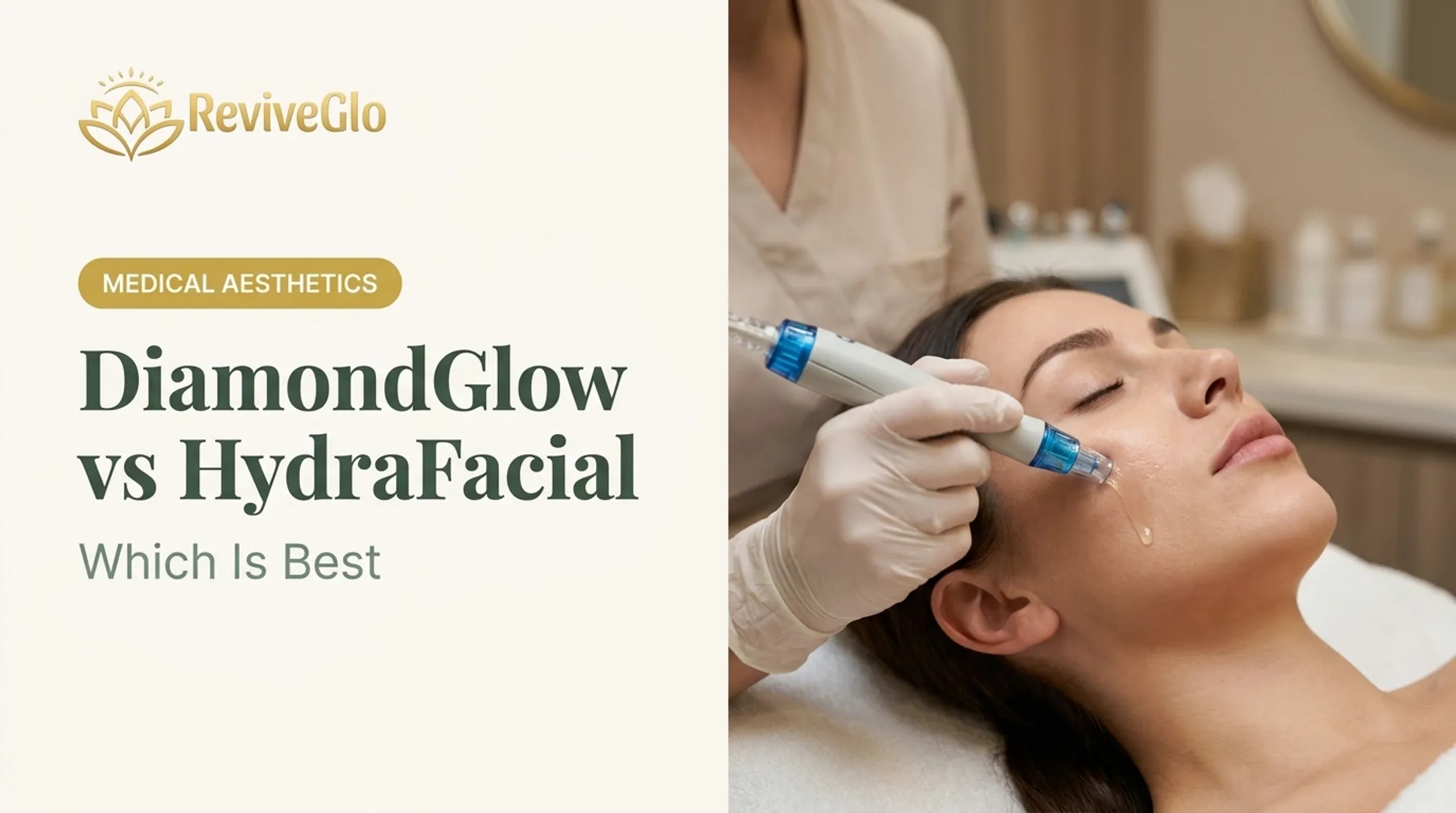
A professional facial or HydraFacial supports cleansing, hydration, and a temporary brightness boost. It is not a replacement for scar-remodeling procedures like microneedling or resurfacing.
This type of treatment fits best when:
- You want minimal downtime
- Your goal is overall skin health support, not pit correction
- A provider has confirmed active acne and sensitivity are under control first
Avoid aggressive extractions, abrasive scrubs, or stacking multiple exfoliating treatments without guidance—particularly on inflamed or pigment-prone skin, where over-exfoliation tends to backfire.
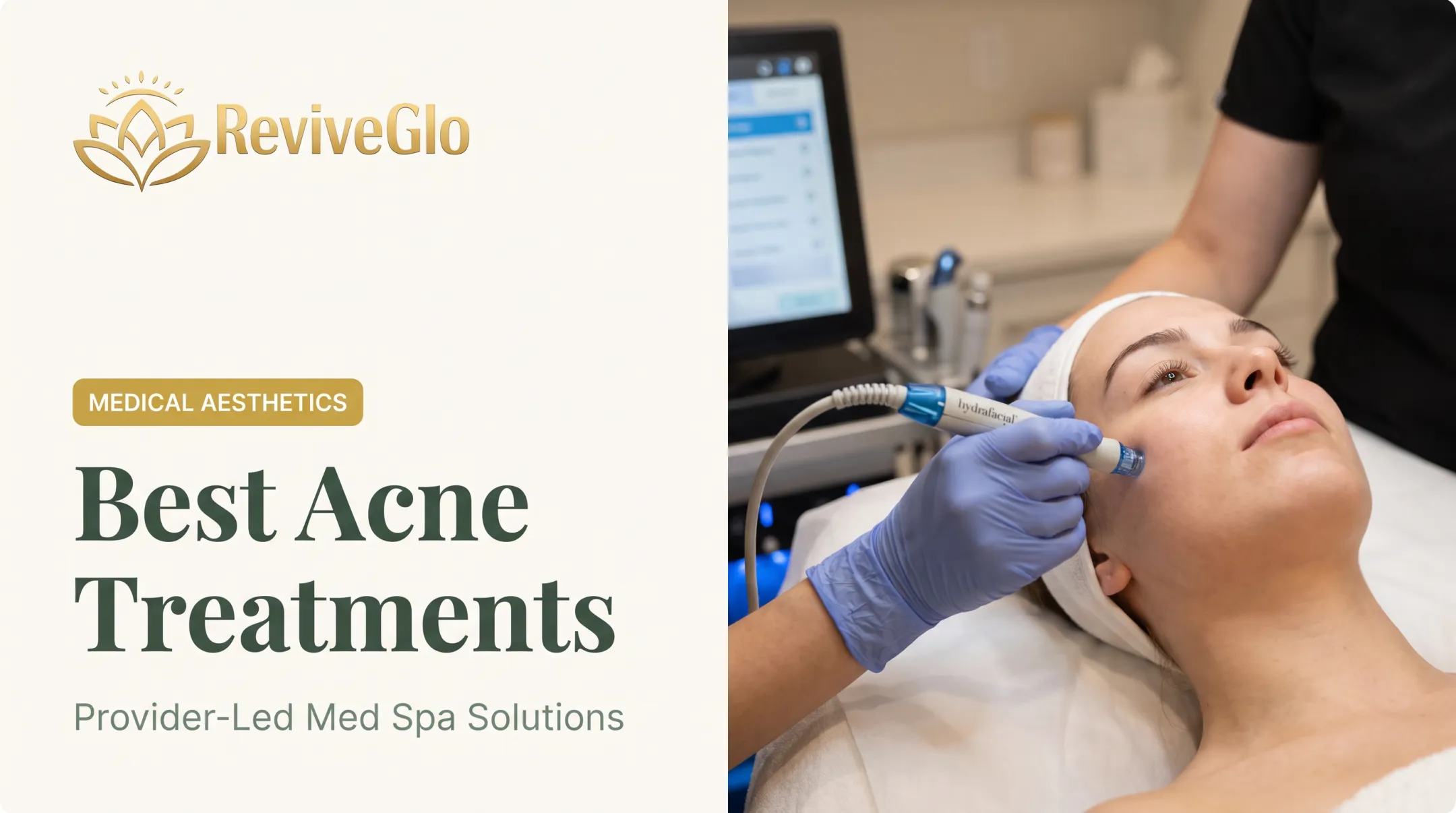
ReviveGlo Med Spa's HydraFacial MD Elite service combines cleansing, gentle exfoliation, extractions, hydration, and LED light therapy for clearer-looking, hydrated skin. It's positioned as skin-health support, not correction of pitted or textural scarring.
How to Choose the Best Acne-Scar Treatment
A proper consultation starts by identifying what you're actually treating: discoloration, atrophic scarring, hypertrophic scarring, keloids, or still-active acne. Each requires a different plan.
A Practical Comparison Framework
When comparing options, ask about each of these:
- Expected benefit — improvement or elimination?
- Number of sessions required for visible change
- Downtime you'll need to plan around
- Cost range so you can budget and compare
- Maintenance needs after the initial series
- Risks, including pigment changes for your specific skin tone

Questions to Ask a Provider
- What scar type do I actually have?
- What results are realistic for my skin?
- What's my risk of pigmentation changes with this treatment?
- Who performs the procedure, and what's their training?
- What aftercare and follow-up is included?
A thorough consult should cover your goals, health history, skin type, and timing before any plan is set. That is the approach ReviveGlo Med Spa uses, and it is a useful standard to expect from any provider you consider.
Red Flags to Watch For
- Promises of "100% removal" or guaranteed results
- Pressure to buy a package before any assessment
- Willingness to treat over active infection
- Vague or unverifiable credentials
- No discussion of hyperpigmentation or raised-scar risk before treatment
Conclusion
Acne-scar treatment works best when it's matched to the specific type of mark and paired with ongoing acne prevention, daily sun protection, and consistent aftercare. Flat marks from PIH or PIE often fade with time and good skincare habits. Depressed and raised scars usually need staged professional treatment, and even then, the honest goal is improvement, not disappearance.
If you're not sure what you're dealing with, or you have melanin-rich skin and want a conservative approach, start with a consultation. ReviveGlo Med Spa can review your skin history, goals, and pigmentation risk, then map a staged plan matched to your scar type.
Frequently Asked Questions
How do I get rid of pimple scarring?
Treatment depends on whether you're dealing with pigmentation, redness, depressed scarring, or raised scarring. Sunscreen and acne control help prevent marks from worsening, but textural scars need a professional assessment to determine the right procedure.
How long does it take for a pimple scar to go away?
Flat post-inflammatory marks often fade gradually over several months. True scars, like ice pick, boxcar, or rolling patterns, often persist without treatment. There's no guaranteed timeline since healing varies by scar type and skin tone.
Do pimple scars usually go away?
Flat red, pink, or brown marks often improve on their own over time. Ice pick, boxcar, rolling, hypertrophic, and keloid scars, however, typically don't disappear without professional treatment.
Can acne scars be 100% removed?
No treatment can promise complete removal. Appropriate procedures can meaningfully reduce visibility and improve texture, but results vary based on scar type, depth, and individual healing response.
How can I tell if a pimple is scarring?
A temporary mark is flat and fades over weeks to months. A true scar is indented, tethered, raised, firm, or painful, and it may extend beyond the original blemish. When in doubt, a professional evaluation clears it up quickly.
How can I treat acne scars on darker skin?
Start with daily sun protection, pigment-conscious skincare, and steady control of active breakouts. Then consult a provider experienced with melanin-rich skin who can discuss post-inflammatory hyperpigmentation risk before recommending any procedure.