
Introduction
Search "salmon PDRN before and after" and you'll find dramatically different photos. Some show subtle glow. Others promise a full transformation in one session.
That inconsistency isn't random. Results depend on the product formulation, delivery method (topical versus injectable), number of sessions, the specific skin concern being treated, and even when the "after" photo was taken.
Here's what many people misunderstand: PDRN generally supports gradual skin-quality improvement, not instant volume like a filler or an overnight transformation. Swelling right after treatment is a temporary reaction, not the lasting result.
This article breaks down a realistic timeline, what changes by skin concern, who's a reasonable candidate, and how to read before-and-after photos without falling for marketing hype.
Key Takeaways
- Immediate redness, swelling, or small bumps after treatment are side effects, not the final result
- Early changes (days 3-14) show up as hydration and brightness; texture and firmness take longer
- Results depend on product, delivery method, treatment area, baseline skin, and full session completion
- Fair before-and-after comparisons need matched lighting, angle, and enough elapsed time
What Salmon PDRN Is and What It Can—and Cannot—Change
PDRN stands for polydeoxyribonucleotide, a mixture of DNA fragments purified from salmon or trout sperm. "Salmon DNA" is just the consumer-friendly shorthand you'll see on product labels and clinic menus.
How It's Believed to Work
Researchers have proposed that PDRN interacts with adenosine A2A receptors, potentially supporting fibroblast activity, tissue repair signaling, and modulation of inflammation. A 2017 pharmacological review of PDRN documented these mechanisms in wound-healing research, including a pilot study where donor-site wounds treated with PDRN plus hyaluronic acid healed completely in 67% of cases, compared to 22% with hyaluronic acid alone.
That's meaningful wound-repair data. It is not proof that a facial injection or serum will produce the same effect on wrinkles or dullness.
Delivery Methods Are Not Interchangeable
- Topical PDRN skincare: absorption through intact skin is still poorly defined in the research
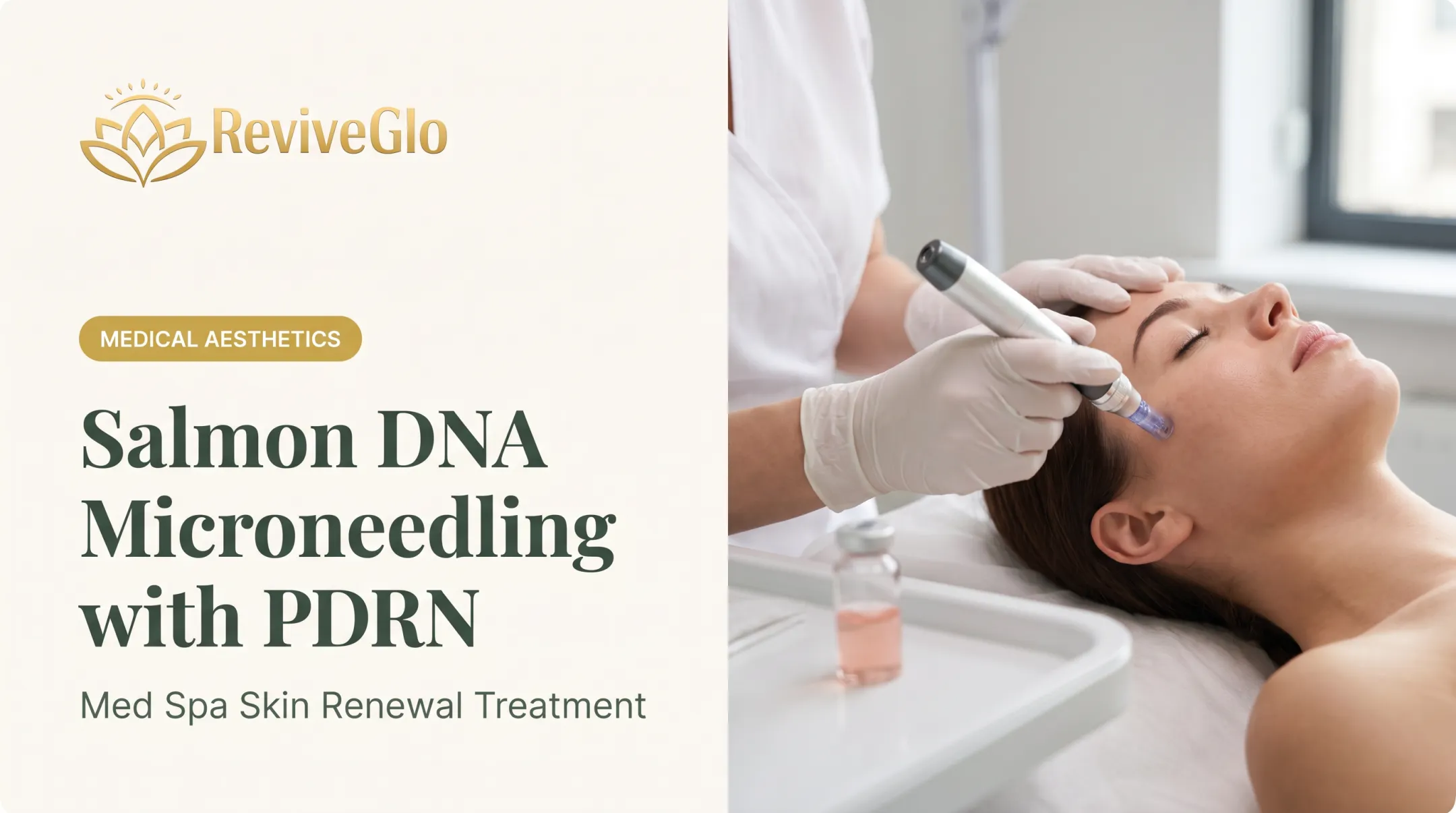
- Microneedling-assisted application: creates micro-channels that may improve penetration, though formulations vary
- Mesotherapy-style injections: place PDRN into the superficial dermis with multiple small injections
- Deeper injectable protocols: studied for skin quality, not volume replacement
Each method has a different absorption profile and evidence base. A topical serum and an injectable product should never be expected to deliver the same before-and-after result.
What PDRN Can and Cannot Realistically Change
PDRN has been studied for dullness, dehydration, uneven texture, mild fine lines, and post-procedure skin recovery.
Those are realistic targets. It generally does not:
- Replace lost facial volume the way a dermal filler does
- Relax muscle movement like a neuromodulator
- Erase deep scars in one session
- Guarantee improvement in every pigmentation or active acne case
For comparison, related in-clinic options work differently and sit at different price points:
| Treatment | Primary action | Typical starting price |
|---|---|---|
| Dermal fillers | Direct volume restoration | $749/syringe |
| Skin boosters | Hydration and skin quality | $50 |
| PDRN protocols | Gradual tissue signaling | Varies by delivery method |

Fillers change shape; skin boosters and PDRN are closer on mechanism, with far less proof behind PDRN for cosmetic before-and-after claims.
A 2025 systematic review of polynucleotide treatments in aesthetic medicine found only nine studies covering 219 patients, with low-to-moderate evidence quality and no meta-analysis possible. The honest takeaway: promising, not proven.
Salmon PDRN Before and After: A Realistic Results Timeline
Individual results vary, but clinical studies outline a general timeline most patients can use as a reference.
First 24-72 Hours
Short-term injection-site reactions are common. You may notice:
- Temporary redness or mild swelling
- Sensitivity or pinpoint marks
- Small raised bumps at injection sites
One clinical trial reported injection-site edema in 71% of patients, with erythema and itching in a smaller share.
Contact your provider if you notice:
- Worsening pain
- Spreading redness
- Significant swelling
- Fever
These aren't typical reactions.
Days 3-14
Some patients notice improved hydration, brightness, or reduced dullness during this window. Be cautious interpreting "glow" photos here, though. Temporary swelling, new skincare products, flattering lighting, or simple hydration can all mimic treatment results.
Weeks 3-6
Texture and superficial fine lines may start looking more refined as the skin's remodeling response develops. Timing isn't universal—individual biology sets the pace.
Weeks 6-12 and Beyond
Structural or collagen-related improvements, where they occur, tend to appear gradually and may continue after the final session. A 2026 observational study tracked patients at 1, 3, and 6 months after periorbital polynucleotide injections. It reported continued improvement in smoothness and fine lines through the 3-month mark.

One Session vs. a Full Series
That longer arc is why session count matters. One treatment may produce visible early changes, but cumulative improvement—when it occurs—usually depends on completing the provider's recommended series and spacing. Ask your provider for their specific protocol rather than assuming a standard number of sessions.
| Timeframe | What You May Notice | What's Biologically Happening |
|---|---|---|
| 0-72 hours | Redness, swelling, tenderness | Immediate inflammatory response |
| 3-14 days | Hydration, brightness | Early tissue response, possible swelling resolution |
| 3-6 weeks | Texture refinement | Remodeling begins |
| 6-12+ weeks | Structural/collagen-related changes | Longer-term tissue response, if it occurs |
What Results Can You Expect by Skin Concern?
Results differ meaningfully depending on what you're actually treating.
Fine Lines and Early Skin Laxity
PDRN can support smoother, more hydrated-looking skin and subtle softening of superficial lines. Deeper wrinkles or noticeable laxity usually need other interventions, such as neuromodulators or fillers.
Dullness, Dehydration, and Uneven Texture
This is where PDRN's hydration and repair focus lines up best with realistic expectations. Improved radiance and surface smoothness are achievable, though sun protection, daily skincare, and any underlying skin conditions still shape the final result.
Acne Marks, Redness, and Post-Inflammatory Changes
PDRN can play a supporting role in a broader recovery plan, not act as a stand-alone fix.
Address these first with diagnosis-specific care:
- Active acne or infection
- Melasma and persistent pigmentation
- Deeper textural scarring that needs collagen remodeling
Microneedling remains a more established option for texture, tone, and acne-scar appearance through direct collagen stimulation.
Under-Eye Concerns
Not all under-eye issues are the same:
- Thin skin and fine lines — more likely to respond to PDRN's texture-focused effects
- Hollowness - a volume issue, not a skin-quality issue
- Vascular darkness or pigment-based circles - separate mechanisms entirely
PDRN shouldn't be presented as a substitute for volume correction where hollowness is the primary concern.
Melanin-Rich or Pigment-Prone Skin
Conservative treatment planning and sun protection matter more here. PDRN does not perform differently by skin tone, but post-inflammatory hyperpigmentation still needs specific management no matter which treatment you choose.

Before-and-after interpretation checklist for any concern:
- Identify the baseline issue precisely (dullness vs. laxity vs. pigment, for example)
- Confirm the minimum realistic timeframe for that specific concern
- Check that lighting, angle, and makeup are consistent between photos
- Account for texture changes that photos may not show clearly
Who May Be a Good Candidate and How to Assess Results Safely
Good candidates are adults seeking gradual skin-quality improvement—not an overnight transformation. They can follow aftercare and accept that visible change builds across sessions.
You may be a strong fit if you:
- Want better texture, tone, or hydration rather than dramatic reshaping
- Can commit to a multi-session plan with consistent photo documentation
- Have realistic expectations about subtle, progressive change
- Will pause treatment and contact a clinician if irritation worsens
When to Pause or Seek Medical Clearance First
Talk to a licensed clinician before treatment if any of these apply:
- Pregnancy or breastfeeding
- Active skin infection or uncontrolled inflammatory skin disease
- Known allergies relevant to the product
- Blood-thinning medications
- Immune system concerns
- Recent procedures in the treatment area
- History of abnormal wound healing
Regulatory context matters too. According to Dermatology Times, injectable PDRN is not FDA-approved for cosmetic use in the United States as of 2026. Ask directly about a product's regulatory status before booking.
Questions Worth Asking Before Any Treatment
- What is the exact product and its source?
- Is this topical, microneedling-assisted, or injectable?
- Who is performing the procedure, and what are their credentials?
- How many sessions are typically recommended?
- What are the realistic risks and expected recovery?
- How will results be documented for comparison?
How to Assess Results Safely
Judge progress on a schedule, not day-to-day mood:
- Match before/after photos by lighting, angle, distance, and bare skin
- Track texture, tone, and hydration over weeks—not 48 hours
- Note downtime separately from true outcome (redness is not “the result”)
- Stop and call your clinician if pain, spreading redness, or delayed healing appears

If you're weighing PDRN against other skin-rejuvenation options, start with a provider-led consult on your skin history, goals, and timeline. At ReviveGlo Med Spa, Ruby Bhayani, RN, BSN, CCM, brings more than 30 years of clinical nursing experience to conservative, natural-looking plans—including PIH-conscious considerations for melanin-rich skin.
A consultation is the right place to choose what fits your skin, rather than guessing from photos online.
Frequently Asked Questions
How long does it take for PDRN to show results?
Early hydration or glow may appear within 1-2 weeks, while texture and collagen-related changes typically take 6-12 weeks or longer. Timing varies by delivery method and individual response.
How long do salmon DNA injections last?
Duration depends on the specific product, injection protocol, number of sessions completed, your baseline skin condition, and maintenance plan. There isn't reliable clinical data supporting one universal duration.
Does salmon PDRN really work?
Wound-healing research on PDRN is well-established, but cosmetic rejuvenation evidence remains limited, with a 2025 review finding only nine small studies. It's promising, not proven.
Should I use salmon PDRN every day?
Daily use only applies to certain topical products, and only if the label says so. Injectable and mesotherapy-style protocols follow a clinician-set schedule, never a daily routine.
How many salmon PDRN treatments do you need to see results?
Some people notice changes after one session, but providers often recommend a series for cumulative improvement. There's no standardized session count across all products and protocols.
What should you expect immediately after salmon PDRN treatment?
Temporary redness, swelling, pinpoint marks, tenderness, or small bumps are common and usually resolve within days. Contact your provider if you notice spreading redness, significant pain, or fever.
Conclusion: What Salmon PDRN Before and After Results Really Mean
The most credible salmon PDRN before-and-after result is gradual, subtle, and cumulative. Final appearance depends on several factors:
- Treatment method and provider technique
- Your baseline skin and aftercare habits
- Number of sessions completed
- Lighting and other photo conditions
Viral before-and-after photos can't account for any of that context. A real assessment can.
If you're considering PDRN or another skin-rejuvenation approach, talk it through with a qualified medical aesthetics provider first. ReviveGlo Med Spa in Missouri City offers consultations that start with your goals, skin history, and timeline. Reach out to schedule a conversation before committing to any treatment plan based on photos alone.