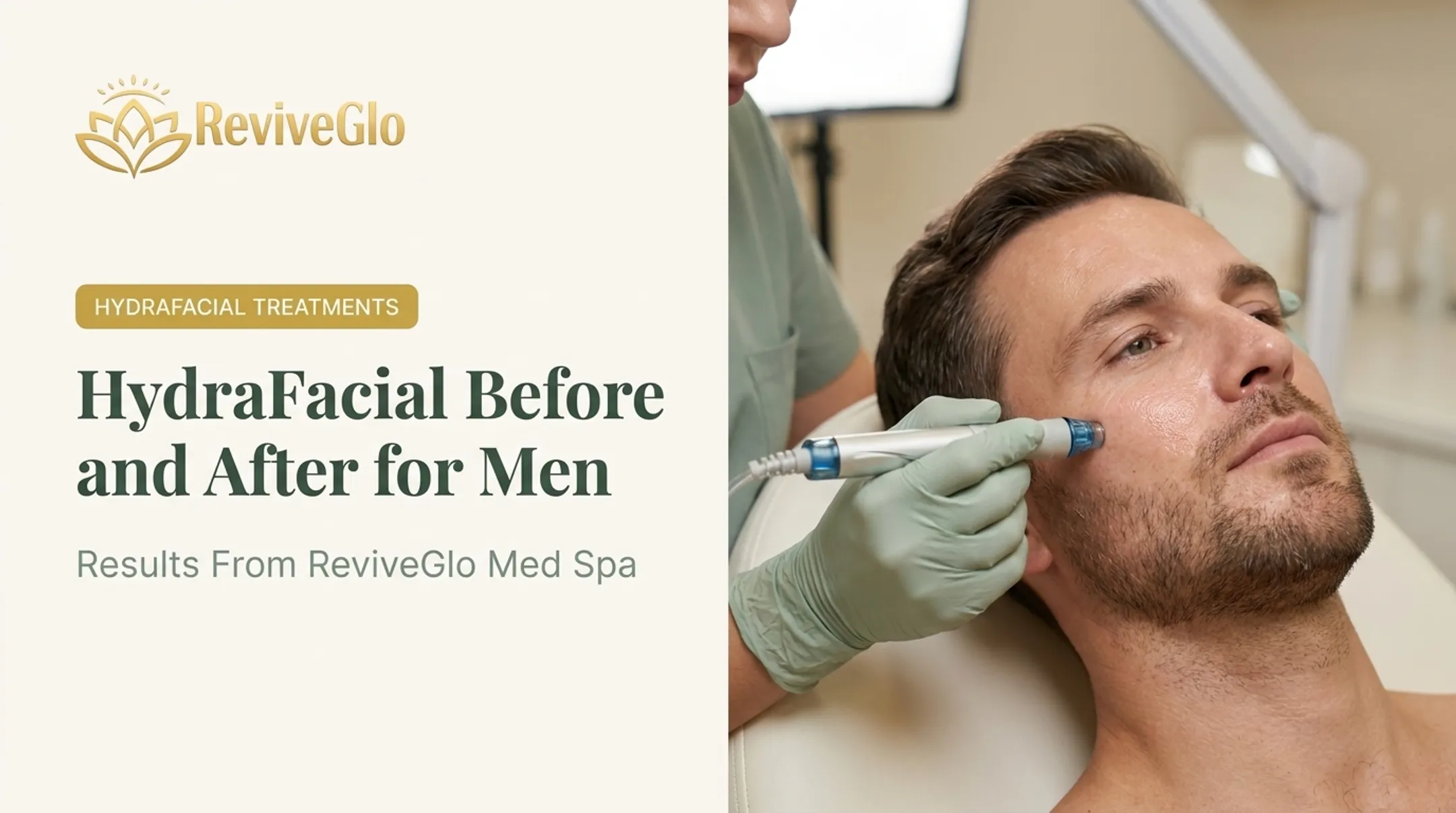

Many people struggle to tell the two apart, or assume they do the same thing. They don't. Dermaplaning clears surface buildup and fine facial hair. HydraFacial cleanses, exfoliates, extracts, and hydrates in one session. Combined, when a licensed provider decides it's appropriate, they can create a more complete refresh.
This guide walks through what actually happens before, during, and after each treatment, what results are realistic, how to prepare, and when one option makes more sense than pairing them together.
Key Takeaways
- Dermaplaning clears dead skin and vellus hair; HydraFacial cleanses, exfoliates, extracts, and hydrates in one pass.
- Pair them with dermaplaning first in most cases, then tailor order to your skin type and goals.
- Expect instant smoothness and glow; acne, pigment, and fine lines usually need a multi-visit plan.
- Book only after daily SPF, gentle skincare, and a professional consult are in place.
What Dermaplaning and HydraFacial Do Before and After
Dermaplaning: Surface Reset, Not Permanent Change
Dermaplaning uses a sterile surgical blade to gently scrape away the outermost layer of dead skin and vellus hair (the fine "peach fuzz" that catches light and makeup). It's a physical exfoliation method, not a chemical one, and it doesn't touch the hair follicle itself.
Here's what it does and doesn't do:
- Removes surface debris and fine hair for an immediately smoother feel
- Improves how makeup sits and how skin looks under bright light
- Does not make regrown hair darker, thicker, or coarser
- Does not change deep scars, wrinkles, or pigmentation on its own
HydraFacial: A Multi-Step Skin Service
HydraFacial's Signature treatment follows a set sequence in one appointment, according to HydraFacial's official treatment description:
- Cleanse
- Exfoliate
- Extract
- Hydrate
Higher tiers add targeted boosters (Deluxe) or lymphatic drainage (Platinum). At ReviveGlo, this is offered through HydraFacial MD Elite, with the level chosen after a consultation.

Why Dermaplaning Usually Comes First
Used together, the two treatments shape what you see in before-and-after photos. When both are done in the same visit, dermaplaning typically comes first. It clears surface debris and hair so the HydraFacial steps that follow work on a cleaner surface.
No controlled clinical study has proven this order universally superior. It is a common practice-level protocol, not a fixed rule, and your provider may adjust or skip a step based on how your skin looks that day.
Peer-reviewed evidence on dermaplaning's efficacy remains thin. A 2011 systematic review found support for noninvasive skin resurfacing methods, including dermaplaning, to be scarce and largely anecdotal.
Treat before-and-after changes as cosmetic and temporary, not corrective, for concerns like acne scarring or deep pigmentation.
What Results to Expect and How to Read Before-and-After Photos
Immediate vs. Long-Term Changes
Right after either treatment, most people notice softer-feeling skin, a smoother base for makeup, and a temporary glow from added hydration. Mild redness is normal for a few hours to a couple of days. Here's what typically shows up versus what does not:
- Surface smoothness, less visible flakiness, and a fresher-looking glow right away
- Better-maintained hydration and texture over time, but only with repeat visits and a consistent home routine
- No guaranteed correction of active acne, melasma, post-inflammatory hyperpigmentation, deep scarring, or noticeable skin laxity According to the Cleveland Clinic, redness and swelling from dermaplaning should ease within a week. Contact your provider if you notice bleeding, blistering, signs of infection, or swelling that lasts longer than that.
What Actually Shapes Your Results
Your baseline skin condition matters more than the treatment name on the menu. Oiliness, dehydration, sensitivity, active inflammation, and how consistent you are with sunscreen and aftercare all influence what you'll see in the mirror a week later. Two people getting the identical service can walk away with different outcomes.
Reading Before-and-After Photos Honestly
Before-and-after images are only useful when the comparison is fair. Look for (or request, if you're documenting your own progress):
- Same lighting, camera distance, angle, and facial expression in both shots
- Clear timing that states how many days or weeks separate the photos
- No filters or retouching that distort what the treatment actually achieved
- "Results vary" labeling, not a promise of what you'll get ReviveGlo shares real client results with written consent on its gallery, always noted as individual outcomes rather than guarantees.
A Note for Melanin-Rich Skin
Cosmetic procedures and skin trauma can trigger melanocyte activity in people with more melanin, according to a 2022 JAAD update on cosmetic procedures in people of color, increasing the risk of post-inflammatory hyperpigmentation. That risk is manageable when a provider reviews your skin history before deciding whether, or how aggressively, to exfoliate. At ReviveGlo, treatment planning starts with that assessment so exfoliation stays appropriate for your skin.
How to Prepare, Combine, and Care for Your Skin Afterward
Before You Book
Come to your consultation ready to discuss:
- Your current skincare routine, including retinoids and exfoliating acids
- Any recent peels or laser treatments
- Active acne, cold sores, or a history of skin sensitivity
- Allergies, medications, and pregnancy-related considerations
Preparation Checklist
- Pause potentially irritating actives if your provider advises it
- Avoid arriving with sunburned or freshly irritated skin
- Skip booking right before a major event until you’ve had a test treatment
Combining Dermaplaning and Hydrafacial
Many clients have both in one visit when the skin is a good candidate. Typical sequencing:
- Dermaplaning first to clear peach fuzz and surface debris
- Hydrafacial next so serums absorb more evenly
- Same-day pairing only if your provider clears active breakouts, barrier damage, or recent procedures

If your skin is reactive, your plan may space the two treatments instead of stacking them.
Aftercare Priorities
Once treatment is done, keep it simple:
- Use a gentle cleanser and moisturizer
- Apply broad-spectrum sunscreen daily
- Avoid picking, scrubbing, or resuming actives until your provider clears it
- Skip excessive heat, tanning, and harsh exfoliation for the window your provider specifies
At ReviveGlo, aftercare is reviewed before you leave, and most clients return to normal activities the same day.
Contact your provider if you notice:
- Worsening pain or significant swelling
- Blistering or a spreading rash
- Redness that does not improve as expected
Who May Benefit and When to Postpone
Dermaplaning and HydraFacial work well if you want smoother texture, less visible peach fuzz, better hydration, or a quick refresh before an event. HydraFacial also fits monthly maintenance for ongoing skin health.
You may need to modify or postpone treatment if you have:
- Active breakouts, rosacea, eczema, or psoriasis
- Open areas, sunburn, or signs of infection
- A compromised skin barrier
- A history of strong reactions to exfoliation
Sometimes the right call is HydraFacial alone, dermaplaning alone, or waiting until your skin is ready. That is individualized care, not a setback.
If you have a medical condition, take prescribed medications, or have a cancer-treatment history, disclose it during your consultation. ReviveGlo's team includes an Oncology Esthetics Certified provider, but oncology-related skincare decisions should always be guided by your clinical care team alongside your esthetics provider.
Choosing a Personalized Treatment Plan
The right treatment depends on your primary concern, not on what's trending. A provider matches the approach to whether you're dealing with:
- Surface texture or peach fuzz
- Dehydration or dullness
- Congestion or acne-prone skin
- Sensitivity or uneven tone
ReviveGlo Med Spa offers HydraFacial MD Elite with Signature, Deluxe, and Platinum options, with treatment plans built around your consultation.
Licensed aesthetician Monica Romo leads these skin treatments with support from lead nurse injector Ruby Bhayani, RN, BSN, CCM, under Medical Director Dr. Salvador J. Abrams.
Before booking, ask about:
- The exact steps and products involved
- Expected redness or downtime
- Any contraindications based on your health history
- Aftercare instructions and follow-up recommendations
If you're in Missouri City, Sienna, Sugar Land, or the broader Fort Bend area, you can find out whether dermaplaning, HydraFacial, or a customized combination fits your skin goals. Reach out to ReviveGlo Med Spa at 832-363-0841 or Info@ReviveGlo.com to schedule a consultation.
Frequently Asked Questions
Should I get dermaplaning or a HydraFacial first?
When both are appropriate in one visit, dermaplaning is typically done first so the HydraFacial can treat a smoother surface. Your provider should still confirm the order based on your concerns and current skin condition.
How long is a HydraFacial with dermaplaning?
Plan on a longer visit than a standard facial—timing shifts with treatment level and add-ons. Confirm the expected duration when you book so you can schedule accordingly.
What should you not do before a HydraFacial?
Avoid unapproved exfoliation, irritating actives, tanning, and excessive sun exposure. Don't book while your skin is inflamed or compromised, and follow your provider's individualized prep instructions.
Can I get a HydraFacial and dermaplaning done together?
Yes—many clients combine them in one appointment. Active irritation, infection, sunburn, or a compromised barrier may mean postponing or modifying the plan after your provider assesses your skin.
Is HydraFacial with dermaplaning worth it?
It can be, when the pairing fits your goals, skin type, and aftercare habits—and when a qualified provider performs it. Many people treat it as a strong refresh for texture, glow, and smoothness.